

Views: 0 Author: Site Editor Publish Time: 2026-03-09 Origin: Site
A guest may forget the artwork on the wall or the style of the curtains, but they rarely forget the quality of the sleep they experienced during their stay. The moment a traveler lies down after a long journey, the bed becomes the most important element of the room. That instant feeling of comfort often determines whether a guest remembers the hotel positively or not. For luxury properties, selecting the right Hotel Mattresses is therefore not simply a purchasing decision but a critical part of delivering a premium hospitality experience.
Luxury guest rooms demand more than ordinary bedding. Guests paying higher room rates expect a mattress that feels supportive, comfortable, and restful from the first night. For hotel operators and procurement teams, this means choosing mattresses that deliver consistent comfort across different body types while maintaining durability under frequent use. A well-designed hotel mattress supports not only sleep quality but also long-term operational efficiency and brand reputation.
Luxury hospitality begins with how a guest feels when entering the room. The bed is typically the focal point, and the mattress determines whether that first impression becomes a positive one.
A premium mattress should provide an inviting balance of softness and support. When guests sit or lie down, they should immediately feel that the bed adapts to their body while maintaining stability. This sensation often defines whether the stay feels relaxing or merely functional.
For luxury rooms, comfort must be consistent across every unit. Guests staying in different rooms of the same property should receive the same level of sleep quality each night.
Hotels serve guests from diverse backgrounds, with different sleeping habits and body structures. A mattress designed for hospitality must therefore accommodate a wide range of sleeping positions and weights.
Balanced support helps ensure that both lighter and heavier guests experience proper spinal alignment. This universal comfort approach is one of the reasons many luxury hotels prefer medium-firm mattress constructions.
A mattress that performs well across diverse guests reduces complaints and enhances the likelihood of positive reviews.
Luxury rooms typically command higher prices because guests expect superior comfort. If the mattress does not reflect that expectation, the perceived value of the room decreases.
High-quality mattresses help reinforce the premium positioning of the property. Guests often associate a comfortable bed with overall hotel quality, making mattress selection a crucial investment rather than a simple furniture purchase.
Many hospitality designers consider medium-firm support to be the most versatile option for luxury rooms. This firmness level offers enough cushioning to feel comfortable while maintaining structural support for the body.
Guests who prefer softer mattresses often still find medium-firm beds comfortable, especially when paired with mattress toppers. Meanwhile, guests who need stronger support are less likely to experience discomfort.
Because of this broad acceptance, medium-firm mattresses remain the preferred choice for many luxury hotels.
Very soft mattresses may initially feel luxurious, but they can lead to discomfort during longer stays. Excessive softness can cause uneven support, especially for guests who sleep on their backs or stomachs.
Luxury hotels aim to create a sleep environment that remains comfortable throughout the entire night, not only during the first few minutes of use. Balanced firmness ensures that guests wake up feeling rested rather than fatigued.
Mattress toppers provide an additional layer of comfort that allows hotels to customize the sleeping experience. A supportive mattress combined with a soft topper creates a plush surface without compromising structural stability.
Toppers also offer operational benefits because they can be replaced or upgraded without changing the entire mattress. This flexibility allows hotels to maintain consistent comfort while managing maintenance costs.
Advanced mattress designs often include zoned support systems. These systems provide different levels of firmness in specific areas of the mattress to support various parts of the body.
For example, the shoulder and hip regions may require softer cushioning to relieve pressure, while the lumbar area benefits from firmer support. Zoned construction helps maintain proper spinal alignment while reducing discomfort.
In luxury rooms, this feature contributes significantly to overall sleep quality.
Edge support is another important construction feature. Strong edges prevent the mattress from collapsing when guests sit or sleep near the sides.
Without proper edge support, the usable sleeping area becomes smaller and the mattress may lose its shape over time. Reinforced edges ensure that guests can use the entire mattress surface comfortably.
For hotels, this feature also improves durability and helps maintain the visual presentation of the bed.
The overall height of the mattress influences how the bed appears in the room. Luxury hotels often prefer thicker mattress profiles because they create a more substantial and inviting look.
A taller mattress paired with high-quality bedding enhances the visual impact of the bed, making it appear more luxurious and comfortable.
Bed presentation plays an important role in guest perception, and mattress height contributes to that visual impression.
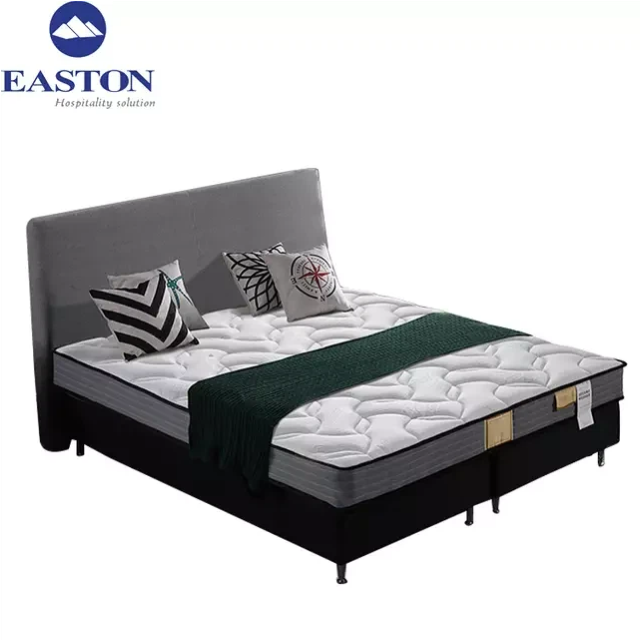
Hotel mattresses experience significantly more usage than residential mattresses. In many properties, beds are used by different guests every night throughout the year.
Because of this high turnover, durability becomes a key factor in mattress selection. Materials must withstand continuous compression without losing their shape or support.
Luxury hotels require mattresses that maintain their structure and comfort even after extended use.
Mattress sagging not only affects comfort but also damages the visual appearance of the bed. Guests quickly notice uneven surfaces, which may lead to negative impressions of the room.
High-quality construction and resilient materials help prevent sagging and ensure long-term performance.
Maintaining a consistent mattress surface preserves both guest satisfaction and the overall presentation of the room.
Hotels typically replace mattresses according to planned renovation cycles. Having standardized specifications makes it easier to reorder the same mattress model when replacements are needed.
Consistency ensures that guests continue to experience the same level of comfort even after several years of operation.
Mattress protectors play an important role in hospitality bedding systems. They create a barrier that protects the mattress from moisture, spills, and dust.
By using protectors, hotels can extend the lifespan of their mattresses while maintaining a hygienic sleep environment.
Protectors are also easier to clean and replace than mattresses themselves.
Toppers add an additional comfort layer that enhances the sleeping experience. Hotels can use toppers to create a plush surface while maintaining a supportive mattress core.
They also allow hotels to adjust comfort levels across different room categories without replacing entire mattresses.
Bed linen should fit the mattress dimensions precisely. Properly sized sheets and duvet covers ensure a clean and professional appearance.
When mattress height and linen dimensions align correctly, the bed looks well-structured and inviting. This visual harmony contributes to the overall perception of luxury.
Hotels often divide rooms into several categories, such as standard rooms, deluxe rooms, and suites. Using different mattress tiers allows hotels to match comfort levels with room pricing.
Standard rooms may use durable mid-range mattresses, while suites benefit from more advanced constructions with additional comfort features.
This tiered approach helps maintain cost control while enhancing premium guest experiences.
Premium mattresses should be allocated to rooms where they have the greatest impact. Suites and executive rooms typically benefit the most because guests staying there expect a superior experience.
Strategic allocation ensures that investment in higher-end mattresses delivers maximum value.
Maintaining too many mattress variations can complicate inventory management and replacement planning. Hotels often benefit from limiting the number of mattress specifications used across the property.
A balanced approach allows luxury rooms to maintain premium comfort while keeping procurement processes simple.
Feature | Why Luxury Rooms Need It | Guest-Facing Benefit | Operations Benefit | Priority Level |
Medium-Firm Support | Provides universal comfort | Better sleep quality | Fewer complaints | High |
Zoned Construction | Supports body alignment | Pressure relief | Consistent comfort | High |
Edge Support | Prevents sagging at edges | Full sleeping surface | Longer durability | High |
Mattress Height | Enhances visual presentation | Luxury appearance | Better bedding fit | Medium |
Protective Layer | Extends mattress life | Cleaner sleeping environment | Reduced replacement cost | High |
A mattress used in luxury hotel rooms must deliver more than simple softness. The ideal solution combines balanced support, durable construction, and compatibility with a complete sleep system. When hotels evaluate mattresses based on comfort performance, long-term durability, and standardized procurement planning, they create a stronger foundation for guest satisfaction.
Easton Hotel Supplies provides comprehensive hotel room solutions designed to simplify hospitality procurement. Our mattress programs include well-engineered sleep systems suitable for luxury rooms and suites, supported by compatible protectors, toppers, and bedding products. Hotels planning upgrades or new property openings can contact our team to explore tailored solutions for premium rooms and discover high-performance luxury hotel mattresses designed for modern hospitality environments.
Contact us today to learn more about customizable hotel mattress solutions and complete guest room programs for luxury hospitality projects.
Medium-firm mattresses are commonly used in luxury hotels because they provide a balanced combination of comfort and support for a wide range of guests.
Toppers add an extra comfort layer that enhances softness while allowing the mattress core to maintain structural support. They also make maintenance easier because they can be replaced separately.
Hotel mattresses typically last several years depending on usage frequency and maintenance practices. High-quality construction and protective layers help extend their service life.
Key factors include balanced support, durable construction, edge reinforcement, and compatibility with mattress protectors and bedding systems. These elements ensure both comfort and long-term operational performance.


