

Views: 0 Author: Site Editor Publish Time: 2026-03-04 Origin: Site
Hotel procurement teams rarely search for the single most expensive amenity. Instead, they look for solutions that balance guest comfort, operational practicality, and brand presentation. A simple item like Disposable Slippers can influence guest perception, housekeeping efficiency, and sustainability goals at the same time. Hotels today must evaluate slippers not only by appearance, but also by how well they support daily operations and overall room experience.
Eco-friendly slippers are becoming an important part of hotel amenities programs because they combine responsible material choices with reliable comfort. However, what counts as a “top” slipper option is not universal. The best option depends on the hotel’s room positioning, guest expectations, and turnover patterns. Understanding the most common eco-friendly slipper types used in hospitality helps hotels identify which designs truly fit their property.
Different hotels operate under very different conditions. A luxury resort offering spacious suites may choose plush slippers that feel soft and premium, while a city business hotel might prioritize compact designs that are easy to stock and distribute. Because of this, the definition of a top slipper option varies widely.
Hotels must first determine how slippers fit into their room concept. Standard rooms typically require efficient, lightweight options that maintain comfort without increasing cost. Premium suites, however, may benefit from thicker slippers that contribute to a more luxurious stay experience.
By aligning slipper style with room positioning, hotels create a more coherent guest experience without overspending on unnecessary upgrades.
Comfort remains the most visible factor when guests use slippers. Materials that feel soft against the skin and provide adequate cushioning immediately enhance the perception of quality.
At the same time, slippers must look clean and presentable. Guests often notice details like stitching, texture, and overall shape. These small visual cues influence whether a hotel feels carefully designed or simply functional.
Replacement cost also plays a role. Hotels with high occupancy levels must ensure that slippers remain cost-effective while maintaining consistent quality. This balance is why the “top” option is not necessarily the most elaborate one.
A universal slipper design rarely satisfies every hotel type. Climate, room category, guest demographics, and operational scale all influence the ideal choice.
Some hotels prioritize minimalist aesthetics, others emphasize spa-like comfort, and many focus on operational efficiency. Recognizing these differences allows hotels to select eco-friendly slippers that genuinely support their property rather than simply following trends.
Cotton terry remains one of the most recognizable materials used in hospitality textiles. The soft loops of terry fabric create a comfortable and absorbent surface that guests associate with high-quality towels and bathrobes.
When used for disposable slippers, terry fabric creates a feeling of warmth and softness that immediately enhances the guest experience. Many guests instinctively perceive terry slippers as more luxurious because they resemble spa textiles.
This familiarity makes terry slippers particularly suitable for properties that want to deliver a premium atmosphere.
Upscale hotels and resorts often integrate terry slippers into their room presentation. These slippers complement plush bath linen and bathrobes, reinforcing a cohesive bathroom experience.
Spa-focused hotels also prefer terry slippers because they feel comfortable after showers or wellness treatments. The material absorbs moisture and maintains a soft texture, which aligns well with relaxation-focused environments.
Luxury suites benefit especially from terry slippers because they help reinforce the perception that every detail has been carefully selected.
Despite their advantages, terry slippers are typically thicker than lightweight alternatives. This means they may occupy more storage space and slightly increase logistics costs.
For hotels with limited storage areas or very high room turnover, these factors may influence purchasing decisions. In such cases, properties may reserve terry slippers for premium room categories while using lighter styles for standard rooms.
Waffle fabric slippers have gained popularity in modern hospitality environments because of their simple and elegant appearance. The textured surface adds visual interest without appearing overly decorative.
Boutique hotels often prefer waffle designs because they complement contemporary interior design. Clean lines, neutral colors, and subtle textures help maintain a cohesive visual theme throughout the guest room.
These slippers communicate sophistication through simplicity.
Lightweight slippers also provide operational advantages. Their compact design makes them easier to store, transport, and distribute during housekeeping routines.
Hotels with high occupancy rates benefit from slippers that pack efficiently and allow staff to restock rooms quickly. Reduced packaging size can also simplify inventory management.
Because of these practical benefits, waffle slippers often become the preferred choice for business hotels and urban properties.
Although waffle slippers are lightweight, they still provide a refined look. The distinctive pattern creates texture without adding unnecessary bulk.
This subtle design detail helps hotels maintain a polished appearance while keeping operational processes efficient.
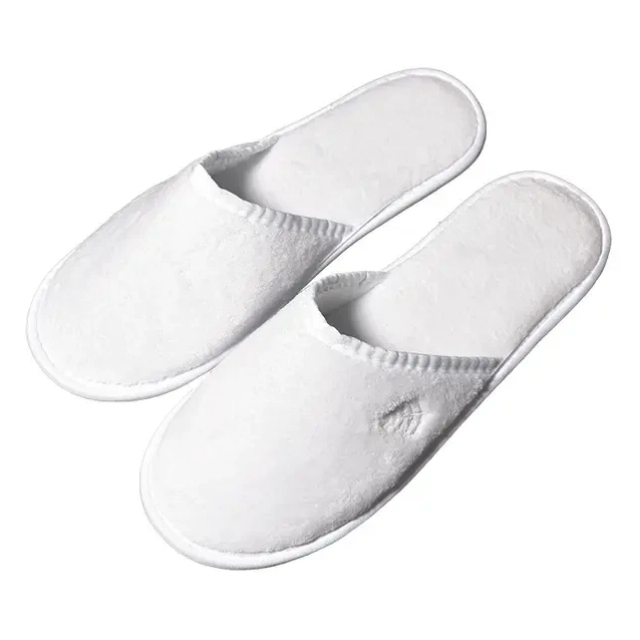
Closed-toe slippers tend to appear more structured and polished than open-toe designs. Guests often interpret them as a sign of higher quality because they resemble traditional indoor footwear.
This perception makes closed-toe slippers particularly popular in upscale hotels and premium guest rooms.
Properties located in cooler climates often prefer closed-toe slippers because they provide additional warmth and coverage. Guests staying in mountain resorts, winter destinations, or colder regions appreciate the added comfort.
Luxury hotels also frequently use closed-toe slippers because they create a more finished presentation when placed beside the bed or inside the wardrobe.
Open-toe slippers remain practical for warm climates and resort destinations. They allow better airflow and feel lighter during hot weather.
Hotels located in tropical regions often choose open-toe designs to ensure guests remain comfortable throughout their stay.
Hotels with hundreds of rooms require products that maintain consistent sizing and structure. Slippers that follow standardized dimensions simplify room preparation because staff can place them quickly without adjustments.
Consistency also improves guest satisfaction, as each room delivers the same experience.
Packaging formats influence how quickly housekeeping teams can prepare rooms. Organized cartons and clearly labeled packaging make distribution easier.
Efficient packaging also reduces storage complexity and ensures that slippers remain clean and ready for use.
Large hotel groups often operate multiple properties across different cities or regions. Reliable supply ensures that the same slipper design can be used consistently across locations.
Standardizing slippers across multiple hotels helps maintain brand consistency while simplifying procurement planning.
Hotels increasingly design amenities programs that work together as a complete guest experience. Slippers paired with matching bath linen and bathrobes create a unified bathroom presentation.
Guests notice when these elements complement each other in material and design.
A well-coordinated amenities program improves both appearance and functionality. Slippers, towels, and robes that share similar textures and colors reinforce the hotel’s design concept.
This consistency helps hotels create a more memorable guest environment.
Planning amenities as a coordinated package also simplifies procurement. Instead of sourcing each item separately, hotels can establish standardized specifications for multiple products at once.
This approach reduces complexity and helps maintain consistent quality across properties.
Slipper Type | Best For | Key Strength | Possible Trade-Off | Recommended Room Category |
Cotton Terry Slippers | Luxury hotels and resorts | Soft premium feel | Slightly bulkier storage | Suites and spa rooms |
Waffle Fabric Slippers | Boutique hotels | Modern minimalist appearance | Thinner cushioning | Deluxe rooms |
Closed-Toe Slippers | Cold climates and upscale properties | Complete premium presentation | Less airflow | Premium guest rooms |
Lightweight Open-Toe Slippers | High-turnover business hotels | Efficient storage and distribution | Simpler appearance | Standard rooms |
Selecting the right slipper style requires balancing guest comfort, hotel positioning, and operational efficiency. The idea of “top” slippers is not about ranking products from best to worst. Instead, it is about identifying the option that best matches the hotel’s room category, sustainability goals, and daily workflow.
Easton Hotel Supplies provides a wide range of room solutions designed to support modern hospitality operations. Our product programs include well-designed disposable slippers available in different materials, thickness levels, and packaging formats to match diverse hotel needs. By aligning slippers with broader amenities planning and room presentation, hotels can create a comfortable and consistent guest experience. For properties seeking reliable room amenities or planning new hotel projects, our team is ready to help you explore suitable hotel slippers that meet your operational and guest expectations.
Contact us to learn more about customizable hotel room solutions and eco-friendly disposable slippers designed for modern hospitality environments.
Eco-friendly disposable slippers typically use materials such as cotton fabrics or recycled fibers and reduce excessive packaging. These designs aim to balance sustainability with comfort and hygiene for hotel guests.
Cotton terry slippers usually feel softer and more luxurious, making them ideal for resorts and premium rooms. Waffle slippers are lighter and easier to store, which makes them suitable for modern hotels with high room turnover.
Closed-toe slippers provide a more complete appearance and offer additional warmth. Because of this, many luxury hotels choose them to enhance the perception of comfort and quality in guest rooms.
Hotels often select a consistent slipper design that matches their brand identity and room categories. Standardized specifications make procurement easier and ensure that guests receive a consistent experience across multiple hotel locations.


