

Views: 0 Author: Site Editor Publish Time: 2026-02-03 Origin: Site
We have all experienced the "hotel sleep effect." You slide between sheets that feel remarkably crisp, cool, and structured, offering a level of comfort that seems impossible to replicate at home. This distinct sensation often sends travelers on a frustrating quest to find the exact brand on the tag. Unfortunately, most consumers equate luxury with high price tags or inflated marketing numbers. They purchase retail sheets boasting 1,000 thread counts, only to find the fabric feels heavy, stiff, and suffocates airflow.
The reality is that true hotel quality bedding relies on specific engineering principles—breathability, tensile strength, and crispness—rather than marketing fluff. A higher number on the package does not guarantee a better night's sleep. This guide will move beyond simple product lists to help you evaluate materials, weaves, and brands. You will learn how to make architectural bedding choices to build a system that delivers five-star rest every night.
The Thread Count Myth: Genuine hospitality-grade sheets typically sit in the 300–500 TC range to maximize airflow and durability; anything over 600 is often marketing manipulation (multi-ply).
Material is Non-Negotiable: Look for Long-Staple Cotton (Egyptian or Supima) exclusively; short fibers pill and trap heat.
The "System" Matters: A hotel bed is a layered ecosystem (Mattress Topper + Fitted Sheet + Duvet + Pillows), not just a sheet set.
Weave Dictates Feel: Choose Percale for the crisp, "cool side of the pillow" hotel feel, or Sateen for a heavier, silky drape.
To replicate the experience of a Ritz-Carlton or Four Seasons, we must first understand the industrial standards that define their linen choices. Hotels do not choose bedding based on trends. They choose based on a rigorous balance of guest comfort and industrial durability.
The non-negotiable standard for five-star properties is Long-Staple Cotton, specifically varieties like Supima (American-grown) or Egyptian cotton. The term "staple" refers to the length of the individual cotton fiber. Short-staple fibers, common in budget bedding, have more exposed ends. These ends break easily, leading to pilling, roughness, and trapped body heat over time.
Long-staple fibers can be spun into smoother, stronger yarns. They resist pilling even during aggressive industrial washing cycles. This structural integrity allows the fabric to maintain its softness for years rather than months. When you touch a sheet that feels smooth yet substantial, you are likely feeling the tensile strength of long-staple cotton.
One of the most pervasive myths in the industry is that higher thread count equals higher quality. In the hospitality world, this is simply untrue. Hotels overwhelmingly prefer a sweet spot of 300–500 Thread Count. This range allows for optimal air permeability. The fabric breathes, keeping guests cool, while retaining enough density to feel luxurious.
Retail brands often trap consumers with numbers like 800 or 1,000. To achieve this, manufacturers use multi-ply yarns—twisting two or three weaker threads together to count them as one strand. The result is a fabric that is dense, heavy, and prone to trapping heat. It lacks the crisp "snap" of genuine best hotel bedding because the weave is too congested for air to circulate.
Walking into a hotel room, you are almost always greeted by a pristine white bed. This is a deliberate psychological and utilitarian choice.
Psychology: White linens suggest pristine cleanliness and a "fresh start" for the guest. It creates a visual halo of hygiene that colored sheets cannot match.
Utility: From an operational standpoint, white linens can withstand high-temperature whitening and bleaching without fading. This lowers the Total Cost of Ownership (TCO) by extending the lifespan of the inventory.
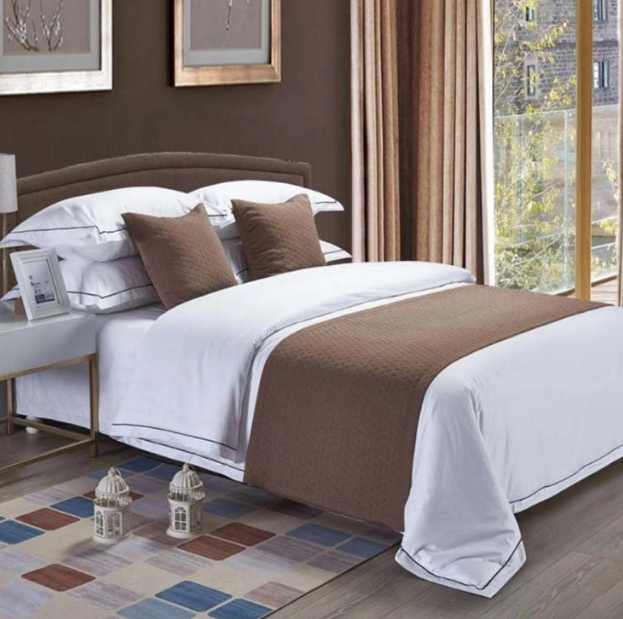
Once you have secured long-staple cotton and a reasonable thread count, the texture of your sleep comes down to the weave. This is the "architecture" of the fabric.
If you are chasing that specific "cool, crisp" sensation found in brands like Marriott Signature linens, you want Percale. This weave uses a one-over-one-under structure, similar to a basket weave. It results in a matte finish and a lightweight, airy feel.
The tactile experience of Percale is comparable to a freshly starched white button-down shirt. It does not cling to the body. Instead, it glides over the skin, making it the superior choice for hot sleepers or those living in warm climates. It provides that refreshing "cool side of the pillow" feeling all night long.
Sateen offers a completely different sensory experience. It uses a three-over-one weave structure, exposing more thread surface area. This creates a fabric with a luminous sheen and a heavier, buttery drape.
Sateen feels warmer against the skin and is often compared to silk, though it is less slippery. It is ideal for cooler climates or sleepers who prioritize softness over structural crispness. High-end lines from heritage brands often feature Sateen for its visual elegance and luxurious weight.
Use this simple logic to select the right weave for your home:
| Feature | Percale | Sateen |
|---|---|---|
| Weave Structure | One-over, One-under | Three-over, One-under |
| Finish | Matte, Crisp | Luminous, Silky |
| Temperature | Cool, Breathable | Warmer, Insulating |
| Best For | Hot sleepers, Summer | Cold sleepers, Winter |
| Feel | Starched Shirt | Buttery Soft |
Buying a sheet set is only step one. A hotel bed feels like a cloud because it is an engineered ecosystem of layers. To replicate this, you must adopt a "sandwich" approach to your hotel bedding sets.
Sheets alone cannot provide the pressure relief or the visual volume of a five-star bed. The magic lies in what is underneath and what is on top. If you put high-quality sheets on an old, flat mattress without layers, the experience will fall flat.
The secret to the "sleeping on a cloud" sensation is usually a high-quality mattress topper. Hotels use plush down or hypoallergenic alternative toppers to add 2 to 4 inches of loft. This layer absorbs pressure points and provides that initial sink-in feeling before the support of the mattress engages.
Visually, hotel beds look inviting because they are fluffy and full. This is achieved by using lofty, oversized duvet inserts. A common trick in interior design is to use a duvet insert that is one size larger than the duvet cover (e.g., a King insert in a Queen cover). This overstuffing creates a plump, luxurious look that refuses to look flat.
Luxury is also a verb. The application of the bedding contributes significantly to the feel. Housekeeping teams use "hospital corners" to pull the bottom sheet extremely tight. This surface tension ensures the fabric remains smooth and unwrinkled beneath you, enhancing the crisp feeling of the Percale or the glide of the Sateen.
When you are ready to invest, the market can be overwhelming. Most luxury hotel bedding falls into four distinct categories.
These are the actual linens used by chains like Marriott, Four Seasons, and The Ritz-Carlton. You can often buy them directly from the hotel's retail arm.
Pros: You get a guaranteed replication of the hotel experience. The specifications are balanced for performance (usually 300 TC).
Cons: They often lack a "luxury unboxing" experience, arriving in utilitarian plastic. The focus is on function over retail presentation.
Brands like Frette and SFERRA (specifically their Giza 45 collections) represent the pinnacle of textile engineering. These are status symbols found in the world's most expensive suites.
Pros: Unmatched longevity and textile quality. The fabric often improves over decades.
Cons: The entry price is extremely high, often ranging from $500 to over $1,000 per set. They also require meticulous care to maintain their finish.
Modern Direct-to-Consumer brands like Boll & Branch and Brooklinen have disrupted the market by offering transparency and lower markups.
Pros: Supply chains are transparent. The sheets are often garment-washed, making them softer "out of the box." Return policies are generally consumer-friendly.
Cons: Due to pre-washing processes, they may lack the extreme, starched crispness of a heritage hotel Percale.
Retail giants offer accessible lines, such as Macy’s hotel collection bedding sets or Costco’s Kirkland Signature.
Pros: Excellent price points for genuine Supima cotton. They are widely available and easy to replace.
Cons: Marketing often leans into high thread counts (600+ or 800+), which may result in sheets that sleep warmer than true hospitality linens.
Viewing your bedding as an investment rather than a disposable expense changes how you buy. A cheap set of short-staple cotton sheets will yellow, pill, and tear within 1 to 2 years. In contrast, a high-quality hotel bedding system made from Supima cotton can last 5 to 10 years, improving in softness with every wash.
To protect this investment, you must alter your laundry habits. Industrial laundry processes are harsh, but they follow specific chemical rules.
Washing: Never use fabric softeners. Softeners coat the cotton fibers in a waxy residue, destroying their absorbency and breathability.
Drying: High heat is the enemy of long-staple cotton. It causes fibers to become brittle and break. Tumble dry on low or medium heat to preserve the fabric's integrity.
Wrinkles: You must accept that real, untreated cotton wrinkles. "Wrinkle-free" sheets achieve their smoothness through formaldehyde-based chemical coatings. The trade-off for true luxury and breathability is a few wrinkles—or a quick iron if you demand perfection.
Achieving five-star comfort at home is not about spending the most money; it is about prioritizing the right metrics. Focus on fiber quality—specifically Supima or Egyptian cotton—and prioritize breathability with a thread count between 300 and 500. Ignore the marketing hype of 1,000 thread counts that only serve to trap heat.
To truly unlock the experience, identify your "sleep personality." If you run hot, choose Percale. If you prefer a silky embrace, choose Sateen. Finally, remember to invest in the complete system. A quality mattress topper and a lofty duvet are just as critical as the sheets themselves. By following these architectural principles, you can turn your bedroom into a personal sanctuary.
A: White bedding offers immediate visual proof of hygiene, assuring guests the bed is clean. It also allows hotels to use high-temperature bleaching to remove stains without fading colors. Psychologically, white creates a sense of calm and a "fresh start" for sleep.
A: Egyptian Cotton (or Supima) is the superior indicator of quality. It guarantees long fibers that resist pilling and soften with age. Thread count is often manipulated by marketing; a 300 TC Egyptian cotton sheet is vastly superior to a 1,000 TC short-staple sheet.
A: Wash them without fabric softener, as softener coats the fibers and reduces crispness. Remove them from the dryer while slightly damp and iron them. Alternatively, pull the bottom sheet extremely tight using "hospital corners" to create high surface tension.
A: This range strikes the perfect balance between durability and comfort. It is dense enough to withstand industrial washing but open enough to allow maximum airflow. This keeps guests cool and ensures the fabric breathes effectively.
A: Percale uses a one-over-one-under weave, resulting in a matte, crisp, and cool fabric ideal for hot sleepers. Sateen uses a three-over-one weave, creating a silky, lustrous surface that is heavier and warmer, making it better for cooler environments.


